top of page


Domiciled Political Thought
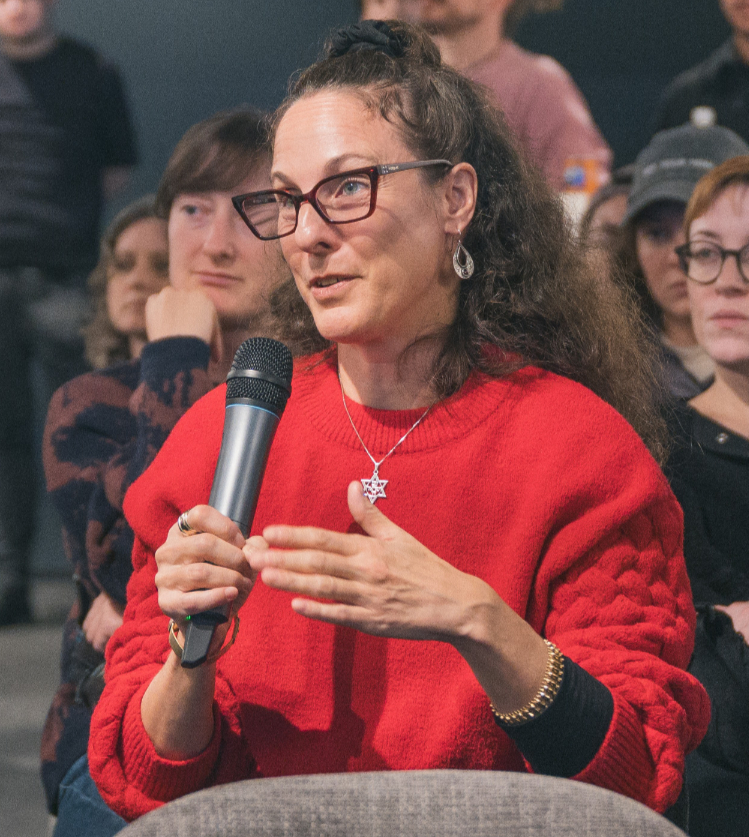
In April 2026, Serrin Routledge-Prior gave a highly informative and engaging talk exploring the joint subjugation women and other animals in society, and the absence of women thinkers the history of political thought, including contemporary political thought on animals. Her thought-provoking presentation was part of a larger project she is working on in which she aims to “think with” historical and contemporary women theorists, especially those whose reflections on the status
Zipporah Weisberg
Jun 256 min read


CFP: Benjamin's Animals. Figurations of the Animal
The Leibniz Centre for Literary and Cultural Research (Berlin) will be hosting a workshop focused on Walter Benjamin and Animals. VAS' own Carlo Salzani will be giving the keynote presentation, which is tentatively titled Bestial Relationships: Benjamin’s Animals Between Shame and Redemption. If this workshop is of interest consider applying. The deadline for applications is 31 May 2026. Below you can find all the details of the call, all of which have been directly taken fro

Vienna Animal Studies
May 73 min read


Domesticated Animals in Sanctuaries of Refugees Fleeing Violence
Sona Kalafusova and Zipporah Weisberg present a lecture as part of the 2026 VAS Summer Lecture Series. On the 9th of April 2026, Zipporah Weisberg and Sona Kalafusova presented a lecture as part of the Vienna Animal Studies summer lecture series, with the aim to explore how animals in sanctuaries are legally defined and what opportunities exist for enhancing their status and protections. They started with a provocative story, a story about pigs at the Progetto Cuori Liberi (

Claudia Hirtenfelder
Apr 283 min read


New Project: Animal Research in Dialog at University of Zürich
Law scholar Prof. Dr. Margot Michel, 3R Coordinator Dr. Paulin Jirkof (both University of Zurich) and Dr. Samuel Camenzind from the Vienna Animals Studies Group (APART-GSK fellow, University of Vienna) have joined forces to establish a new interdisciplinary dialogue format at the University of Zürich. The overall aim of this initiative is to build a lasting dialogue at the University of Zürich – and beyond – in order to advance the implementation of the 3Rs (Replace, Reduce,
Vienna Animal Studies
Mar 221 min read


Bad Faith, Speciesism, and an Existential Mode of Production
On February 26th, John Sanbonmatsu, Professor of Philosophy at Worcester Polytechnic Institute in Massachusetts, gave an inspiring online talk on his most recent book The Omnivore’s Deception: What We Get Wrong about Meat, Animals, and Ourselves, published in 2025 by NYU Press. In his book, Sanbonmatsu, draws on a wide range of thinkers to analyze the existential dimensions of speciesism and to deconstruct how the hegemonic system reproduces itself. Borrowing Marx’ concept

Thomas Kainberger
Mar 103 min read


VAS at the Tierrechtskongress 2025: Three Perspectives on the Future of Animal Ethics
In late November 2025, the 9th Austrian Animal Rights Congress ( Tierrechtskongress ) convened in Vienna, bringing together activists, scholars, and advocates from across the German-speaking world to share their campaigns, strategies, and theoretical reflections. The congress serves as a vital gathering point for those working daily on behalf of animals - offering a view of the broader movement landscape and fostering connections between diverse projects and initiatives. This
Sona Kalafusova
Jan 264 min read


Mercy and Animals: Why Compassion Still Matters in a Technological Age
Leon Borgdorf at the Messerli Research Institute (Photo Credit: Thomas Kainberger) On December 1st, Leon Borgdorf gave a talk at the Messerli Research Institute on mercy as a fundamental virtue in animal ethics. Leon, a PhD candidate at Utrecht University, works on the ethics of emerging technologies in animal agriculture — especially genome editing — and looks at these issues through the lens of virtue ethics. Instead of focusing only on rules or consequences, virtue ethics

Carlo Salzani
Dec 4, 20253 min read


Virtual Encounters of Another Kind
Dr. Judith Benz-Schwarzburg gives a lecture on virtual animals at the Immersium in Vienna (Photo Credit: Oliver Hirtenfelder) On the 8th of October 2025 the Vienna Animal Studies group hosted its largest lecture yet. Held within the impressive in Immersium in Vienna Dr. Judith Benz-Schwarzburg, a Senior Researcher in Animal Ethics and Animal Cognition at the Messerli Research Institute, talked to us about the ethics of digitally representing animals. The event started with a
Claudia Hirtenfelder
Oct 29, 20253 min read


Thinking about Bats in Vienna
Konstantin Deininger, Katharina Leibezeder, and I were recently interviewed by Mara-Daria Cojocaru about our contribution to the project "Philosophy in the Wild. Finding Hope in Mixed Communities," a project that between April 2025 and April 2026 will collect fieldnotes and multispecies poetry in an anthrozoological vasculum that represents Mary Midgley’s biscuit tin
Claudia Hirtenfelder
Jul 2, 20257 min read


Foucault goes to Schönbrunn Zoo
More than twenty people gathered on the 11th of June 2025 to hear Dr Carlo Salzani talk on the development of the modern zoo. Focusing on Schönbrunn Zoo, Dr Salzani used Foucault's models of power as a theoretical grid to argue that ‘the zoo’ and ‘the prison’ are expressions of the same disciplinary matrix.
Claudia Hirtenfelder
Jun 26, 20254 min read


Animals, Empathy, and Anthropomorphism: The Limits of Imagination: An Interview with the Author
Carlo Salzani, VAS member and animal ethicist, recently published Animals, Empathy, and Anthropomorphism: The Limits of Imagination. We caught up with him to find out more about this open access book and his motivations for writing it.
Vienna Animal Studies
Jun 3, 20258 min read


A talk on Genetic Disenhancement and Animal Welfare by Dr. Samuel Camenzind
On the evening of May 14th, the Vienna Animal Studies (VAS) group hosted a lecture by Dr. Samuel Camenzind of the University of Vienna. His talk, titled “Genetic Pain Surgery with Molecular Scissors,” presented the questions of ethics and science of genetic pain disenhancement in animals.

Alexandra Piccio
May 22, 20253 min read


Zwischen Bytes und Bellen: Wie Künstliche Intelligenz unser Verhältnis zu Tieren verändert
Künstliche Intelligenz (KI) verändert unsere gesellschaftlichen und unsere alltäglichen Praktiken – das ist nichts Neues. Doch was passiert, wenn wir den Nutzen und die Risiken dieser Technologie nicht nur in ihrer Anwendung auf Menschen, sondern auch auf nichtmenschliche Tiere bewerten? Denn auch für diese kann die Technologie disruptive Wirkungen entfalten, die mit zahlreichen ethischen Herausforderungen, aber auch Chancen, einhergehen.

Leonie N. Bossert
May 19, 20253 min read


CFP - Political Animals: Animality, Community, and the Future of the Body Politic | Dossier edited by Carlo Salzani
Receipt of works in the form of scientific articles, essays, reviews, interviews, literary texts, images or other formats that reflect on the theme, with a deadline of June 30, 2025 . Two and a half millennia ago, Aristotle provided Western political philosophy with a model that would establish the coordinates that define and organize politics and subjectivity in the West: in Book I of his Politics , he defined "man" (the masculine in the English translation, absent in the Gr

Carlo Salzani
Feb 17, 20254 min read
bottom of page