
VAS at the Tierrechtskongress 2025: Three Perspectives on the Future of Animal Ethics
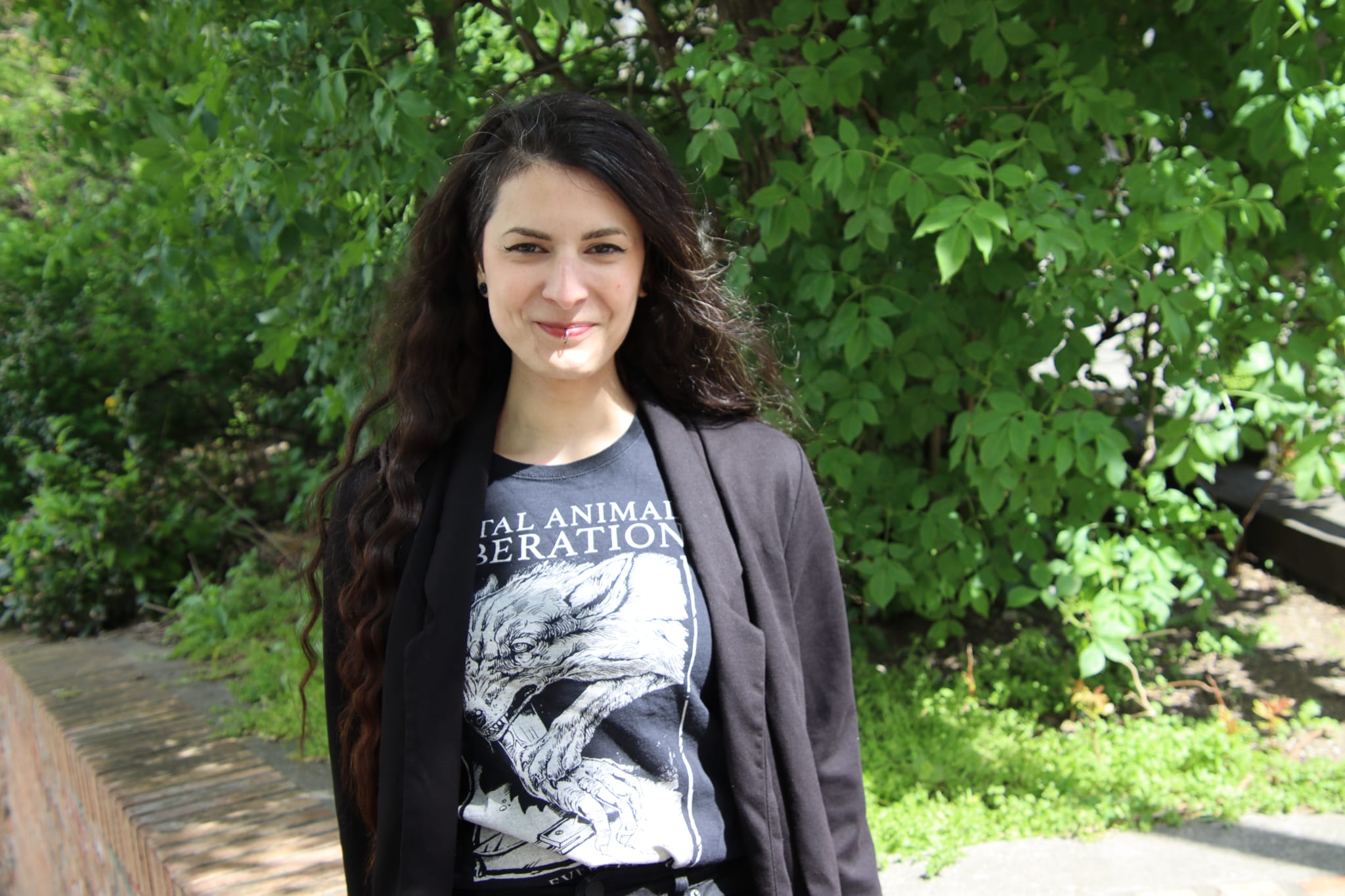
In late November 2025, the 9th Austrian Animal Rights Congress (Tierrechtskongress) convened in Vienna, bringing together activists, scholars, and advocates from across the German-speaking world to share their campaigns, strategies, and theoretical reflections. The congress serves as a vital gathering point for those working daily on behalf of animals - offering a view of the broader movement landscape and fostering connections between diverse projects and initiatives. This year, three members of the Vienna Animal Studies group - Drs. Samuel Camenzind, Doris Schneeberger, and Arianna Ferrari - contributed workshops and presentations that addressed crucial dimensions of contemporary animal advocacy, from the psychological sustainability of activist work to the ethical complexities of emerging biotechnologies.
Biotechnology and the Ethics of Adaptation: The GPD Question

Samuel's Friday workshop tackled one of the most contentious proposals in contemporary animal ethics: Genetic Pain Disenhancement (GPD). This approach seeks to eliminate or reduce pain and suffering in animals through genetic modification - a prospect that raises fundamental questions about how we envision a more ethical relationship with other species.
Samuel clarified that GPD, which focuses primarily on farmed and laboratory animals, should be understood as a welfare improvement akin to other reforms such as eliminating fully slatted floors or improving stunning methods.
Crucially, proponents of GPD do not claim it will solve the problem of animal exploitation or usher in a vegan world. Rather, they argue from a pragmatic position: given the likelihood that we will not abolish animal exploitation within a reasonable timeframe, reducing suffering through GPD may be preferable to allowing current practices to continue unabated.
What distinguished Samuel's workshop was its focus on practical feasibility rather than purely normative questions. While much of the existing literature debates whether GPD would be desirable in principle, Samuel's research examines what concrete developments have occurred in recent years and whether new technologies like CRISPR/Cas genome editing can realistically achieve GPD goals.
The workshop format allowed for robust dialogue between Samuel and audience members, who engaged critically with both the ethical implications and the practical challenges of implementing such interventions. These exchanges highlighted the complexity of evaluating biotechnological proposals that, whatever their intentions, force us to confront uncomfortable questions about adaptation, exploitation, and the boundaries of acceptable reform.
Caring for Those Who Care: Mental Health and Activist Resilience

On Sunday morning, Doris addressed an often-overlooked dimension of animal advocacy: the psychological toll it takes on those who dedicate themselves to this work. In her workshop "Mental Health for Animal Rights Activists – Strong and Resilient for Animals," Doris explored why people are drawn to animal rights work and how it shapes them, examining the complex interplay between empathy, altruism, and biographical experiences that characterizes many activists' journeys.
Doris illuminated how our nervous systems respond to the distress we encounter in this work - through fight, flight, freeze, or fawn responses - and offered practical strategies for self-regulation and resilience.
Her central message was both simple and profound: self-care is not a luxury but the very foundation of effective and sustainable activism.
Through techniques including nervous system regulation exercises, mindfulness practices, and the cultivation of supportive relationships, activists can maintain their capacity to advocate for animals over the long term. It is a reminder that to care well for others, we must first learn to care well for ourselves.
Imagining Alternatives: Two Futures of Cultivated Meat

Also on Sunday, Arianna invited participants on a speculative journey into Vienna in the year 2040. She presented two divergent scenarios shaped by the development of cell-cultivated meat. Her presentation challenged prevailing narratives of inevitable progress, demonstrating how the same technology could yield radically different futures depending on economic, political, and cultural trajectories.
In Arianna's first scenario, the promise of reducing animal exploitation is partially realized: intensive farming operations close, yet animals continue to be bred and maintained for stem cell extraction. The animal rights movement finds itself divided - some celebrating the closure of factory farms while others protest the continued instrumentalization of animals for cellular material.
The second scenario proves more troubling: cell-cultivated meat becomes a supplement rather than a substitute, with overall meat consumption increasing as conventional intensive meat, organic meat, and cultivated meat coexist and flourish. The animal rights movement shrinks and becomes marginalized; many former vegans begin consuming cultivated meat. Animals are strategically bred for different market segments, and those used for stem cell production are ultimately slaughtered once their cell lines are exhausted.
Grounded in current facts, promises, and uncertainties surrounding cell-cultivated meat, Arianna's scenarios resist simplistic narratives of moral progress. They compel us to ask under what conditions, if any, cultivated meat might be acceptable from an animal rights perspective, and to recognize that technological innovation alone guarantees nothing about the ethical future we will inhabit.
Questions and speculations such as these are important for how we think about the future of animal ethics and advocacy.
Animal Studies and the Future of Ethics and Advocacy
Collectively, the three contributions by VAS members demonstrate the breadth and depth of critical animal studies and its contributions to contemporary debates in animal ethics and advocacy. From the psychological dimensions of activism to the practical feasibility of biotechnological interventions and the speculative horizons of alternative proteins, our members are asking essential questions about how we might forge more just relationships with the animals with whom we share this world.
The Tierrechtskongress provided a vital forum for these conversations, and we are grateful to have been part of this year's gathering. As we continue our work at the intersection of research, activism, and public engagement, we remain committed to the kind of rigorous, imaginative, and ethically grounded inquiry that these presentations exemplified.


Comments