
How about Cultivating Ourselves Instead of Cultivating Meat?
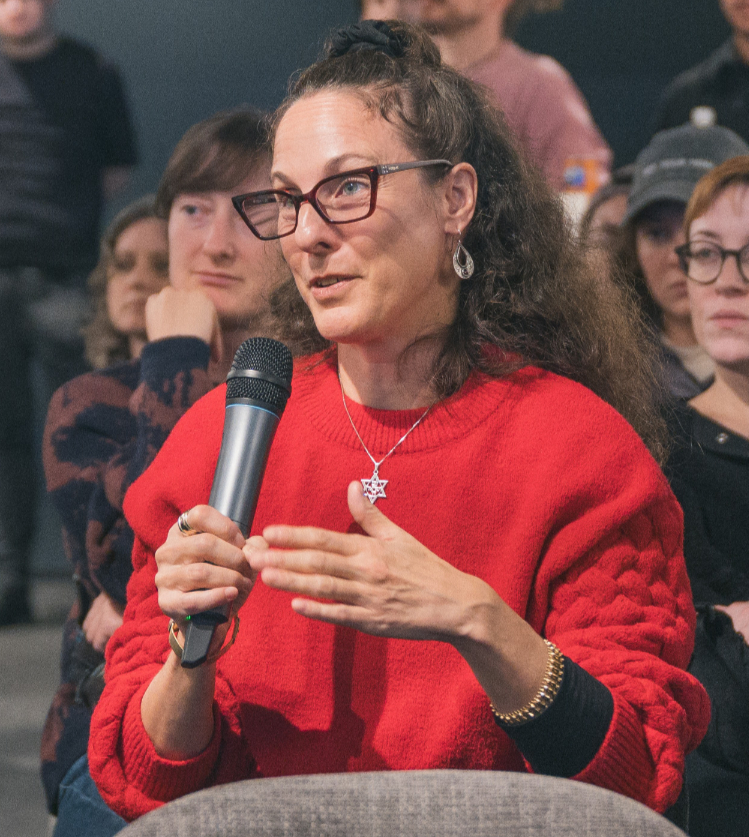
In her recent talk ‘Animal Futures in an Economy of Cultivated Meat,’ Dr. Arianna Ferrari, ethicist and philosopher of science and technology from the Centre for Innovation Systems and Policy, laid bare the complexities and challenges surrounding the development, production, and sale of cultivated meat (also known as ‘cellular meat’ or ‘lab-grown meat’). With a published monograph and numerous articles on the topic, Vienna Animal Studies could not have asked for a more qualified person to present a critical evaluation of cellular meat in its current and potential stages of development.

Animal flesh grown in a lab and intended for sale and consumption is hailed by many within and outside the animal advocacy movement as a win-win solution to the environmental and ethical hazards posed by industrialized animal agriculture. By taking meat production out of the factory farm and into the lab, by replacing the gory abattoir with the sterile bioreactor, the environmental and ethical quagmire of industrialized animal agriculture effectively dissolves into thin air. The promise is that when cellular meat comes to market, consumers can finally ‘have their [cellular] cow and eat her too,’ as animal ethicist Josh Milburn (2023) enthusiastically proclaims. No more Amazonian rainforests will need to be razed to the ground to create grazing land for ‘beef cattle’ if there are no cows to feed, only cells to cultivate. No more animals of any kind, including fishes, will have to suffer the barbaric cruelties of life in the CAFO (Concentrated Animal Feeding Operation) or aquafarm.
Understandably disheartened by the lack of progress in establishing meaningful protections for animals after decades of campaigning, educating, and advocating, at a total loss in the face of increasing levels of global meat production and consumption, and ever-more diabolical forms of production, many animal advocates are at their wits end. If someone like Bruce Friedrich—who co-founded with Ingrid Newkirk People the biggest and most recognizable animal rights organization in the world, People Ethical Treatment of Animals (PETA)—now heads The Good Food Institute, one of the leading companies in the ‘alternative proteins’ industry, there must be something to cultivated meat, right? Friedrich, whose company develops both plant-based and cultivated meat, is not wrong to suggest that appealing to people’s tastebuds and pocketbooks is more effective than appealing to their conscience. If cultivated meat is what will finally bring a stop to the diabolical meat-production industry, why wouldn’t we embrace it wholesale? I suppose we would, if only it were that simple…
In her probing and thorough examination of the science, technology, and policy behind this latest trend, Ferrari revealed just how many pitfalls there are in the creation of meat in the laboratory and its production at scale. Rather than present an argument for or against cultivated meat, Ferrari methodically scrutinized industry claims, weighing the hype against hard facts, the slick corporate optics against the rough and rugged reality, ultimately letting the audience decide for themselves. Among other things, Ferrari highlights the difficulty of ‘cultivating the right stem cells’ and in creating ‘taste, texture, and sensory equivalence.’ Even if those hurdles could be overcome the “[i]nfrastructure gap is enormous. Reaching a $25B cultivated meat market requires 220–440 million litres of fermentation capacity — equivalent to 88–176 Olympic swimming pools — while the entire pharma industry today holds less than ten” Ferrari explains, citing a study by McKinsey (2021).
And then there are the animals themselves, who, as Ferrari duly notes, are largely absent from the discussion. The “[s]cientific literature remains human-centred [the]debate focuses on scalability, stem cell sourcing, corporate concentration vs. small-scale production, and human health risks,” she laments. Meanwhile, “[t]he animal largely disappears from view.” The ethical debates that occur “remain detached from material reality.”
Ultimately, Ferrari concludes, “the academic ethical and social discourse on cultivated meat consistently fails to account for the actual, physical implications across all stages of production on the bodies of animals.”
The development of cultivated meat still requires large numbers of animals held in laboratories and subjected to harmful practices such as repeated and highly invasive biopsies. These animals are not wandering around in fields happy as lambs, as we like to imagine, but are confined in farm laboratories.
In Ferrari’s words. “The promise: No slaughter. No suffering. No problem. The reality: Nobody has mapped what actually happens to animals in a cultivated meat/fish future.”
If we want to play the numbers game, perhaps we could reassure ourselves with the assumption that billions upon billions of animals will be spared in the future as a result of the ‘sacrifice’ the relatively ‘low’ number of animals that are exploited and killed in the development process. Apart from raising troubling ethical questions, this logic is also based on the dubious assumption that cultivated meat will fully replace rather than merely supplement flesh from industrially farmed animals—a shift which is by no means guaranteed.

If it is any indication, the cultivated chicken products produced by US-based Eat Just lab and sold in Singapore, the only country to have seen lab-grown meat go to market so far, contain only three percent of cellular meat. So far, the initiative seems to be failing. Since its highly anticipated launch in June 2023, the cultivated chicken production facility in Bedok, Singapore has ceased operations, and the restaurant in which it was offered has discontinued sales. The industry is gaining ground elsewhere, with meat, dairy, and sugar products set to reach market in the UK within the next two years, so perhaps it has a fighting chance. But given its track record and the other problems it faces, a successful and impactful UK launch seems unlikely. This begs the question: Why not simply focus on developing increasingly sophisticated plant-based product (which after all form the bulk of the cultivated meat products!) along the lines of the Beyond Burger to satisfy people’s seemingly insatiable need for the texture and taste of animal flesh?
The long and short of it is that even if the myriad obstacles associated with cultivated meat could be surmounted, urgent ethical, philosophical, and even existential concerns abound. Our society’s deeply engrained speciesism, not only as a “prejudice” but “a way of organizing our identity (Sanbonmatsu, 2025, p. 7), goes completely unchallenged by this latest technofix to the civilizational crisis we find ourselves in. The good faith question should be not how we can have our cow and eat her too but rather how we can finally give up our insistence on having our cow and eating her too. We ought to be asking how we can transform ourselves from a rapacious, hubristic, and self-obsessed species into a tempered, modest, and other-oriented one. Instead, we choose yet again to impose our will on other animals. Any pop psychology book will tell you that as long as we continue to externalize our psychopathologies instead of confronting them head on, we will only continue to cause others, and ourselves, harm.
After taking all of this into account, to say nothing of the neoliberal capitalist infrastructure propelling the cultivated meat industry, one is left without much choice but to conclude that cultivated meat is at best a precarious, ‘green capitalist’ welfare initiative and at worst a colossal waste of resources that could be directed to developing sustainable plant-based agricultural systems and food products. It is also a wasted opportunity to use this moment of great reckoning with who we are and who we want to be as a society and as a species. It’s high time we cultivate ourselves instead of cultivating meat.


Comments